
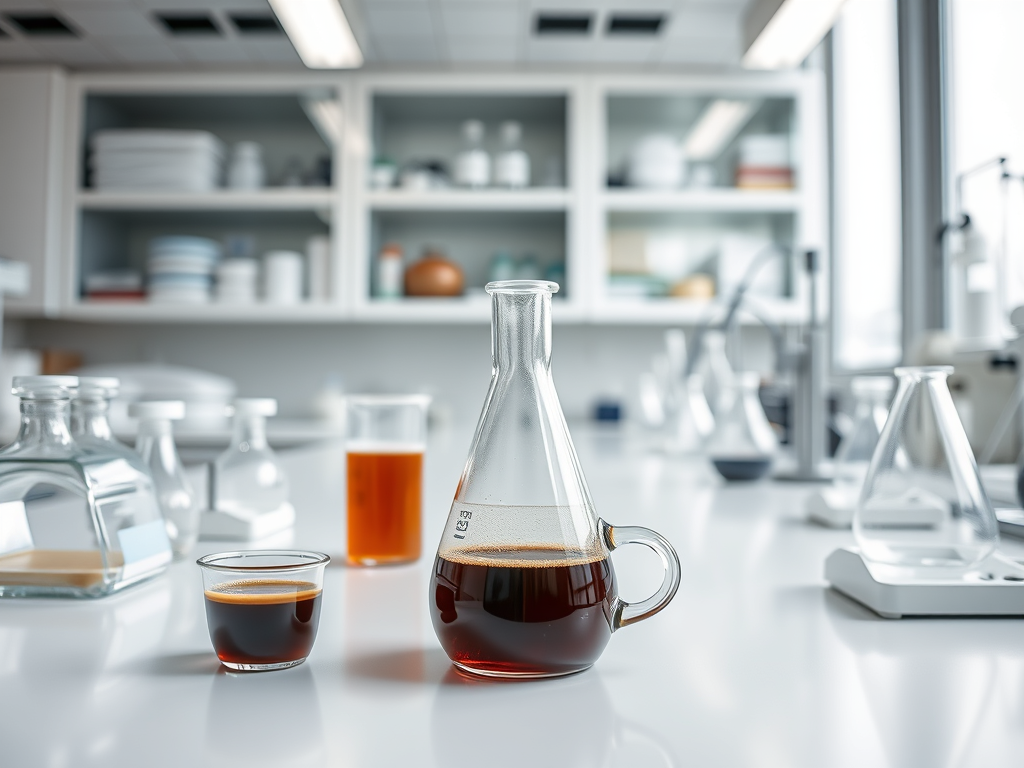
A Comprehensive Review of the Nutritional Composition and Toxicological Profile of Date Seed Coffee (Phoenix dactylifera), by Raphaela Kiesler, Heike Franke, and Dirk W. Lachenmeier (Applied Sciences 2024, 14, 2346) (source: https://www.mdpi.com/2076-3417/14/6/2346) evaluated the potential of date seed coffee as a sustainable and caffeine-free alternative to traditional coffee. The authors proposed an environmentally friendly approach to beverage production by utilizing discarded date seeds.
“The findings provide comprehensive evidence supporting the safe consumption of date seed coffee, as demonstrated by a thorough toxicological risk assessment. This reduces waste and introduces a new culinary use for date seeds, providing a distinctive flavor profile and potential health benefits.”
Raphaela Kiesler, Heike Franke, and Dirk W. Lachenmeier (Applied Sciences 2024, 14, 2346)
Background
Approximately 8 million tons of dates (Phoenix dactylifera) are produced globally each year. The seeds of the fruit, which make up 10–15% of its weight, are typically discarded. Date seed coffee is a sustainable food system innovation rooted in the traditions of high date-producing regions. Dating back to the late 19th century, date seed coffee has evolved from a historical coffee substitute to a modern caffeine-free alternative. Date seed coffee has a long history of consumption. The composition of date seeds was evaluated in this review and a toxicological risk assessment for date seed coffee was conducted.
“Subchronic studies show that consuming date seed or date seed coffee has no adverse effects.”
Raphaela Kiesler, Heike Franke, and Dirk W. Lachenmeier (Applied Sciences 2024, 14, 2346)
This review provided information on the safety of date seed coffee.
Compositional Data on Date Seeds and Date Seed Coffee Products
The methodology for processing date seeds to create a coffee-like beverage closely parallels the traditional preparation of coffee beans from Coffea arabica or Coffea canephora. The initial step involves the separation of the seed from the surrounding pulp, which is critical for ensuring the purity of the product. Subsequent to this, the seeds undergo a series of processes: immersion and cleansing in water to remove any adherent contaminants, dehydration, and roasting at a predetermined temperature to achieve the desired flavor profile. The roasted seeds are then ground to a specific coarseness, akin to coffee grounds, and subjected to a hot water extraction process, mirroring the conventional brewing of coffee.
Below are the main constituents that were analyzed:
1. Macronutrients
Macronutrients are essential calorie-containing components for human nutrition and growth. A rough segmentation is made into carbohydrate, fat, and protein.
1.1. Protein
The protein content of the dry seed matter is only 5%, and the ash content is approximately 1%. Carbohydrates make up the majority of the seed, accounting for over 80% of its composition. At certain temperatures, the protein content noticeably decreases. For instance, roasting seed for over 20 minutes at 220 °C tends to reduce the protein content.
1.2. Carbohydrates
Compared to date flesh, date seeds only contain a small amount of soluble sugars, but a rather high amount of fiber. A total of 16–35% of the total mass consists of glucose, fructose, raffinose stachyose, sucrose, and galactose.
Different heating techniques, and heating in general, can affect the levels of macronutrients. The carbohydrate, fat, and protein values are lower after heating in the oven.
1.3. Fiber
Dietary fiber is defined as non-digestible carbohydrates, such as pectin, cellulose, hemicellulose, and different types of non-starch and resistant saccharides, as well as lignin. The carbohydrates found in date seeds are primarily insoluble fiber types such as cellulose and hemicellulose. A daily fiber intake of 25 g per day is recommended for adults to support normal laxation. In addition, other positive health effects of dietary fiber are associated with reduced risk of heart diseases and the prevention of diet-related diseases. Date seed fiber is a good source of fiber for human nutrition and can be easily added to bread doughs. In summary, dates are good sources of carbohydrates and fiber, with a lower sugar content.
1.4. Fat
The fat content is about one-eighth of the whole date seed with slight differences between date varieties. Date seeds typically contain between 5 and 13% fat, with the distribution of fatty acids being influenced by the date variety, growing conditions, and extraction technique used. Date seed oil has similar characteristics to edible vegetable oil; thus, it can be considered safe for human consumption.
2. Minerals
Several studies have analyzed the mineral composition of date seeds. Considering that date seeds are used for coffee surrogate preparation and consumed daily in the same recommended intake levels as coffee, generally, no health risk is expected. The mineral intake concentration is within the reference quantity. Compared to coffee and barley-coffee drinks, date seed coffee has the lowest mineral content. The mineral content of date seed coffee is only slightly higher in sodium, iron, and zinc compared to Coffea arabica coffee, but still within the recommended dietary intake level. A high intake of the trace element nickel occurs through the consumption of coffee. However, since date seeds contain less nickel than Coffea arabica coffee, substituting the daily coffee beverage intake with products made from date seeds does not pose any health risks. Additionally, date seeds are a good source of calcium and potassium. Mineral contents may vary more between varieties, but, overall, it is unlikely that the recommended daily intake will be exceeded.
3. Plant Secondary Metabolites
3.1. Phenolic Acids and Flavonoids
Date seeds contain a relevant amount of phenolics, primarily composed of flavonoids, which are known for their high antioxidant capacity. Among the different components of the date fruit, the seeds exhibit the highest antioxidant activity, with an IC50 value of approximately 24 μg/mL. Date seed coffee, which has a very strong antioxidant activity, is linked to its high phenolic content. Phenolic compounds preserve fruits against microbial and parasite infections, as well as photo-oxidation. The seeds of a plant are essential for its survival, and the high antioxidant content in the seeds may be due to their high protection value. Date seeds have been found to have an inhibitory effect against Gram-positive bacteria (Staphylococcus aureus). The phenolic content can be affected by several production-specific factors, such as the cultivar, fruit maturity, growing conditions, season, and soil type. Additionally, the final measured results may be affected by the choice of extraction conditions.
The total flavonoid content is lower than the phenolic acid content. Approximately 1–2% of the total phenolic content (TPC) is flavonoids and contributes proportionally to the antioxidant activity.
It has also been shown that procyanidins from date seeds undergo digestion mainly unchanged. This could result in a positive effect on the intestinal microbiome. The flavonoids luteolin and quercetin are present in roasted date seeds and the amounts increase with roasting temperature due to the increased solubilization. When comparing date seeds roasted at 160 °C, 180 °C, and 200 °C, the TPC increases with the roasting temperature and the browning of the date seeds. The higher TPC content can be attributed to chemical reactions occurring during the roasting process, which make free phenolic compounds more readily available. The hybridizability of the tannins and gallic acid was affected by the roasting and grinding of the date seed powder. The phenolic content and oxygen radical scavenging capacity (ORAC) of the tested date seed beverages are influenced by the type of coffee preparation. The sample from the espresso machine contained the highest amount of gallic acid equivalents, followed by hot water suspension, and lastly the filter brew drink. The amount of coffee powder used for the espresso preparation was the lowest.
3.2. Phytosterols
The analysis showed that date seeds contained moderate quantities of sterols and triterpenes, with only β-sitosterol and cycloartenol being identified, which is not present in coffee beans.
3.3. Carotenoids
Date seed oil contains carotenoids responsible for a light-yellowish color. Heating slightly reduced the carotenoid content. β-Carotene was proportionally the most abundant carotenoid in date seed oil. Compared to Coffea arabica brews, the color of beverages made from the date seed powder is brighter and of a reddish and yellowish color.
3. 4. Caffeine
Date seeds are naturally free of any amounts of caffeine compared to coffee powder from coffee plants. Beverages made from date seeds are a good option for consumers who prefer the taste of coffee but want to enjoy it without caffeine.
Conclusion
Date seeds are rich in phenols and flavonoids, as well as vitamin E and carotenoids. Several studies have confirmed that date seeds do not contain caffeine. The high concentration of beneficial ingredients and their antioxidant effects make them a valuable ingredient for food production.
 by Café Phoenix